Summer 2026 · Ages 13–18 · Online
Advanced WSDC Summer Training
Elite training for competitive debaters targeting major tournaments.
About this program
Seven weeks of intensive World Schools Debate training, modeled after the prep routines of top-tier university squads. Each week features a different world-class instructor — current and former champions, finalists, and chief adjudicators drawn from elite circuits. Students leave camp ready to break at major tournaments.
Is this the right fit?
- Who it's for
- Students ages 13–18 · Elite Track
- Prerequisites
- Strong debate foundation. Assessment recommended.
- Format & location
Online · 6 hrs of coaching per week
- Schedule options (Dubai time)
- Online — 2x/week + Weekend Round: Tuesday 4 PM–6 PM · Thursday 4 PM–6 PM — Plus a two-hour judged practice round on the weekend.
- Cohort size
- Maximum 6 students per session.
- Good to know
- •Different world-class instructor each week.
- •Two-hour judged practice round on weekends.
- •Full summer commitment expected.
A sample week
Sample week — Framing & Argument Strategy
Tuesday
- 1 hr
Content Workshop
Analyze different motions and the framing choices that shape each side.
- 30 min
Drilling
Shortened debate speeches and redos against opponents.
- 30 min
Homework
Watch a round on the week's topic; submit video drills.
Thursday
- 1 hr
Real-World Workshop
Find real-life examples and mechanisms for the week's skill.
- 30 min
Rebuttal Drills
Rapid back-and-forth on prepared motions.
- 30 min
Homework
Casewriting with revision against instructor feedback.
Weekend
- 2 hrs
Judged Practice Round
Full round with an experienced adjudicator; written and live feedback.
Week by week
Seven weeks. Each week builds on the one before it, so the course runs as a single progression from the first session to the last.
01Framing & Argument Strategy
July 6 – July 10
How to read a motion and set the terms of the debate. Students learn to choose the strategic ground — what frames advantage their side, what counter-frames to neutralize, and how the choice of definitions and burdens shapes everything that follows.
Readings
- Thinking in Bets — Annie DukeDecision-making under uncertainty — useful for choosing frames strategically.
- WUDC 2024 Grand Final (YouTube)Watch the round and identify each side's framing choices.
- How to Make Our Ideas Clear — C.S. PeirceClassic essay on the conditions that make a claim meaningful.
02Mechanism & How the World Works
July 13 – July 17
Elite arguments explain mechanisms — the causal chain from policy to outcome. Students drill identifying gaps in opponent mechanisms and constructing their own with real-world examples drawn across politics, economics, and society.
Readings
- Why Nations Fail — Daron Acemoglu & James A. RobinsonInstitutional mechanisms behind state success and failure.
- Superforecasting — Philip Tetlock & Dan GardnerHow to model real-world mechanisms with calibrated reasoning.
- Selected Essay (Foreign Affairs)Instructor-curated essay on a current geopolitical mechanism.
03Weighing & Impact Storytelling
July 20 – July 24
Why your argument matters more than theirs. Students master comparative analysis — magnitude, probability, reversibility, moral weight — and learn to tell impact stories that judges remember rather than just check off.
Readings
- The Better Angels of Our Nature — Steven PinkerSections on probability, scale, and historical impact framing.
- Made to Stick — Chip Heath & Dan HeathOn emotional resonance and concrete examples.
- Leader Articles (The Economist)Compact weighing of competing concerns — model briefs each week.
04Rebuttal: Meta-Level Responses
July 27 – July 31
Beyond point-by-point refutation. Students learn to attack the structure of opponent cases — collapsing arguments into core assumptions, exposing internal contradictions, and shifting the level of engagement to gain strategic ground.
Readings
- Thinking, Fast and Slow — Daniel KahnemanChapters on biases and heuristics for spotting structural weakness.
- WUDC Quarterfinal Recordings (YouTube)Instructor-curated rounds — break down rebuttal moves frame by frame.
- Selected Posts (Practical Ethics (University of Oxford))Free blog with model arguments to dissect for hidden assumptions.
05Case Positioning: Whipping & Collapsing
August 3 – August 7
The closing speaker's craft. Students learn what to keep, what to drop, and how to write a whip speech that consolidates the round around arguments most likely to win — without sounding like a recap.
Readings
- WSDC & WUDC Final Whip Speeches (YouTube)Instructor-curated examples of strong whip and reply speeches.
- On Bullshit — Harry FrankfurtShort essay on distinguishing the substantive from the peripheral.
- Coaching Notes from Elite SquadsInstructor-shared materials from Oxford Union and circuit squads.
06Tournament Strategy & 50/50 Rounds
August 10 – August 14
How elite debaters win close rounds. Students work through real 50/50 motions, learn opponent-modeling, and practice the strategic decisions — what to concede, when to take risks, when to play safe — that separate finalists from quarterfinalists.
Readings
- The Inner Game of Tennis — W. Timothy GallweyOn performing well under pressure and self-talk.
- Black Box Thinking — Matthew SyedLearning from close losses — applicable to debate post-mortems.
- Recent 50/50 Motions CompilationInstructor-curated motions from recent WSDC and EUDC seasons.
07Peak Performance & Championship Round
August 17 – August 21
Final week: mental game, performance under pressure, and a full tournament simulation. Students apply every skill from the previous six weeks across multiple rounds, receive judged feedback, and leave with a competition-ready toolkit.
Readings
- Peak — Anders Ericsson & Robert PoolDeliberate practice and the science of expert performance.
- The Checklist Manifesto — Atul GawandePre-performance routines that lift consistency under pressure.
- Champion Debater ReflectionsInstructor-curated essays and post-tournament reflections.
What students take away
Everything included with full summer (7 weeks) enrollment.
- ✓Seven weeks of intensive WSDC training
- ✓A different world-class instructor each week
- ✓Two-hour judged practice round every weekend
- ✓Cohort capped at six students
- ✓Direct tournament-prep cycle for fall majors
Frequently asked
Do you handle inquiries about pricing privately?
Yes. We share program fees, sibling discounts, and any early-enrollment offers directly with families once we understand the right fit. Get in touch and we will send everything within one business day.
What does my child need to attend?
For online sessions: reliable internet, a computer with webcam and microphone, and a quiet workspace. For in-person sessions at our Dubai campus: just themselves and a notebook. All materials are provided.
What if we miss a session?
Online sessions are recorded and shared with enrolled students within 24 hours. Research and writing assignments can be completed asynchronously. We recommend attending live whenever possible for the peer interaction.
What happens after summer ends?
Students can continue with our regular term courses starting in September. Summer students often advance one to two levels and are well prepared for fall tournaments.
Enroll
Configure your enrollment
Pick the schedule track that suits you, then add to your cart. Checkout in one place alongside any other programs you're enrolling in.
Returning Atlantic Ivy student? Use code RETURNING2026 at checkout for an extra $109 off.
Total
$1,307
All 7 weeks · single payment
Selective admission — six seats total. Returning Atlantic Ivy students: use code RETURNING2026 at checkout for $109 off ($980 effective).
Outcomes
What summer changes for our students
87%
Increase in Analytical Thinking Skills
7x
More Likely to Attend a Top-10 University
20%
Increase in Grade Point Average
15%
Increase in Social Confidence
Recent Tournament Results
- •2025 Stanford Invitational — Novice Open Quarterfinalists (Top 8)
- •2025 Oxford Schools Finals — Novice Finals & 5th Best Novice Speaker
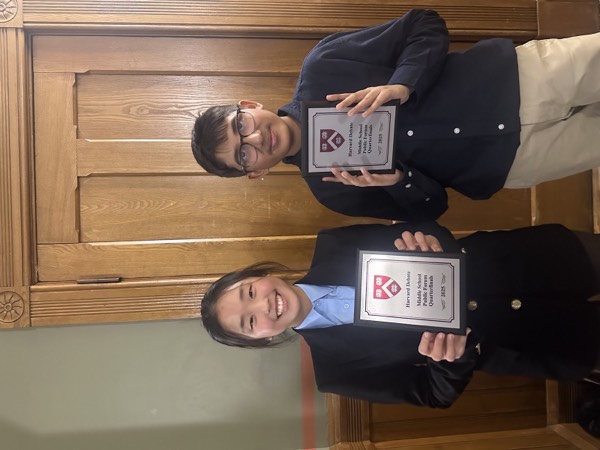
- •2025 Harvard Invitational — Middle School Quarterfinalists, Octofinalists & Top International Speaker
- •2025 Harvard Debate Council International — Middle School Semifinalists
- •2025 Cambridge Union International Young Debaters — Open Finalists & 6th Best Open Speaker
Coaches
Taught by debate champions and Oxford Union coaches
Our instructors include former head coaches of the Oxford Union, world champions, and international finalists. For Advanced WSDC, every week features a different elite instructor.
Meet the teamExplore
Other summer programs
Intro to Debate and Public Speaking Camp
Four weeks in Dubai to go from nervous to confident on your feet.
Learn moreFlagship ProgramFlagship Camp
Seven weeks of debate, writing, and the biggest questions in the world.
Learn moreSpecialist FormatIntroduction to Public Forum
The American 2v2 team format — evidence-driven and tournament-ready.
Learn moreBeginnerIntroduction to Debate
A gentle on-ramp into competitive speech and debate.
Learn moreInquire about Advanced WSDC Summer Training
Tell us about your child and we'll recommend the right track, share dates, and answer your questions within one business day.