John Locke Institute Global Essay Prize · 2027 cycle
John Locke Essay Competition Preparation
The John Locke Essay Competition is the John Locke Institute's Global Essay Prize: a 2,000-word essay on one of thirty set questions, open to any student under 19 and read by academics. We prepare students for it the way the judges read it: a thesis the student can defend, sources that would pass in a university seminar, and as many drafts as the essay needs.
Classes are live online with at most eight students. All of our mentors studied at Ivy League, Oxbridge or G5 universities, and draft edits are unlimited on every track.
From AED 3,200. Every price is on this page, so you will not need a sales call to find out what it costs.
2026 cycle · Atlantic Ivy students
students shortlisted
93%
of our entrants reached the shortlist
17.5%
of all contestants shortlisted, by the Institute's count
2025, our first year: 12 of 18 shortlisted, two Very High Commendations (including the first Emirati student to receive one), three High Commendations and four Commendations. How the 2026 results were counted
The competition
Who was John Locke, and why is an essay prize named after him?
John Locke (1632 to 1704) read medicine and philosophy at Christ Church, Oxford, and spent most of his life on one question: how do we come to know anything at all? His Essay Concerning Human Understanding (1689) argued that knowledge is built from experience and reasoning, not handed down by authority. His Two Treatises of Government gave the American and French revolutions much of their vocabulary. If you wanted one philosopher to stand for thinking for yourself, you would pick Locke.
The John Locke Institute, an Oxford-based educational charity, runs the Global Essay Prize in his name. Each year, in late January, it publishes three questions in each of ten subjects: Philosophy, Politics, Economics, History, Psychology, Theology, Law, International Relations, Public Policy and Science & Technology. Students aged 18 and under pick one and answer it in up to 2,000 words. Entry is free, and entrants under 15 compete for the Junior Prize on the same questions.
Essays are read by academics from Oxford, Princeton and other leading universities and judged on seven published criteria: knowledge, evidence, argumentation, originality, structure, style and persuasive force. There is no mark scheme and no model answer. The essays that do well take a clear position and hold it against the best objection the writer can find. They also read as though a particular person wrote them, which is rarer than it sounds.
- Ten
- subject categories
- 2,000
- words, maximum
- Free
- to enter, worldwide
- London
- awards conference
Rules, eligibility, dates, judging and prizes are set out in full in our complete guide to the John Locke Essay Competition.
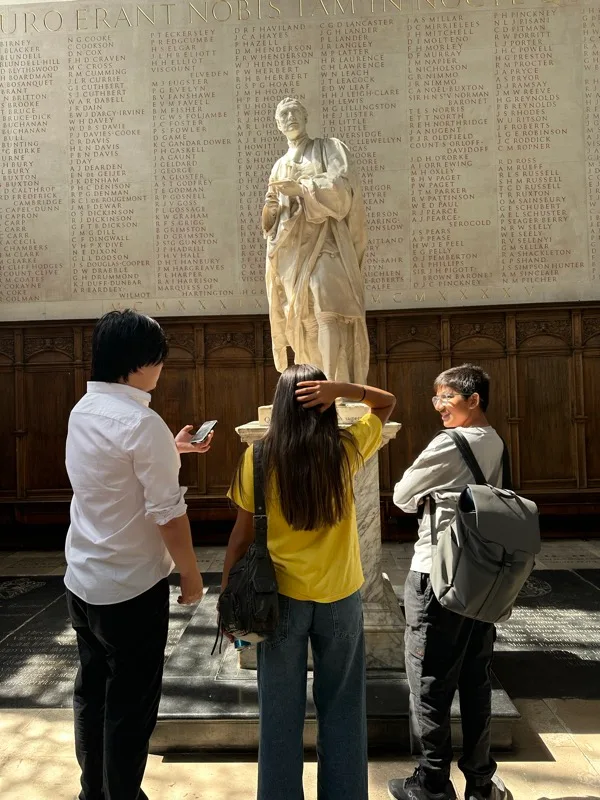
"Reading furnishes the mind only with materials of knowledge; it is thinking that makes what we read ours."
What a result means
The ladder, from entry to prize
The Institute announced that 17.5% of contestants were shortlisted in 2026. It does not publish how many reach the rungs above that, so those proportions are unofficial estimates.
- 01
Entry
One of thirty questions, up to 2,000 words, submitted by the end of May.
- 02
Shortlist
The first cut: 17.5% of contestants in 2026, by the Institute's count. 38 of our 41 students.
- 03
Commendation
Commendation and High Commendation: the Institute's recognition of outstanding work. 2025: seven of ours.
- 04
Very High Commendation
Unofficially the top one per cent or so. 2025: two of ours, including the first Emirati recipient.
- 05
Category prize
Prize winners are invited to the awards conference in London and the Institute publishes the essays.
Our 2026 results
Forty-one students entered. Thirty-eight were shortlisted.
Each dot is one Atlantic Ivy student in the 2026 cycle. The three outlined dots were not shortlisted. We count them, because the rate only means something if the denominator is honest.
We do not treat this as a guarantee and we would rather you did not either. What it shows is that the shortlist rewards skills, and that those skills can be taught in a term.
93%
shortlisted, 2026
67%
shortlisted, 2025 (12 of 18)
9
commendations and above, 2025
How we work
Three things we do that most John Locke prep does not.
The judging criteria are public, so our method is to take them literally. The people reading the drafts should have written at this level themselves. The drafts should keep coming until the essay is right. And the argument has to belong to the student, because the judges can tell when it does not.
01
Every mentor studied at an Ivy League, Oxbridge or G5 university.
We are not a tutor marketplace, and "a top university" is not good enough. The four people who read your child's drafts went through Oxford, Cambridge, Yale and Harvard, and each has coached students onto the John Locke shortlist. They know what an academic reader finds persuasive because they have had to persuade academic readers themselves.
Groups are capped at eight, so the same mentor reads every essay closely every week.
Meet the writing mentors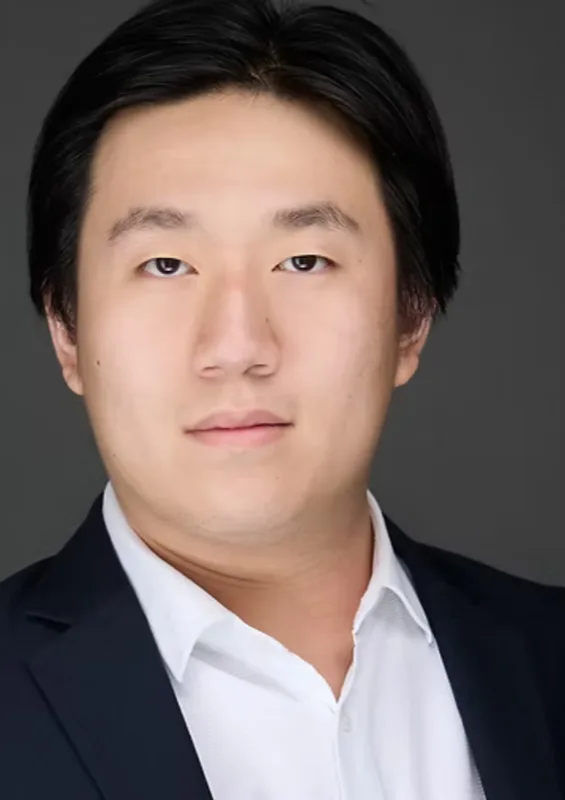
Ricky Huang
University of Oxford
Director of Training, Oxford Union · Founder

Peregrine Beckett
University of Cambridge
MSt candidate · Head Coach, Columbia Debate Society
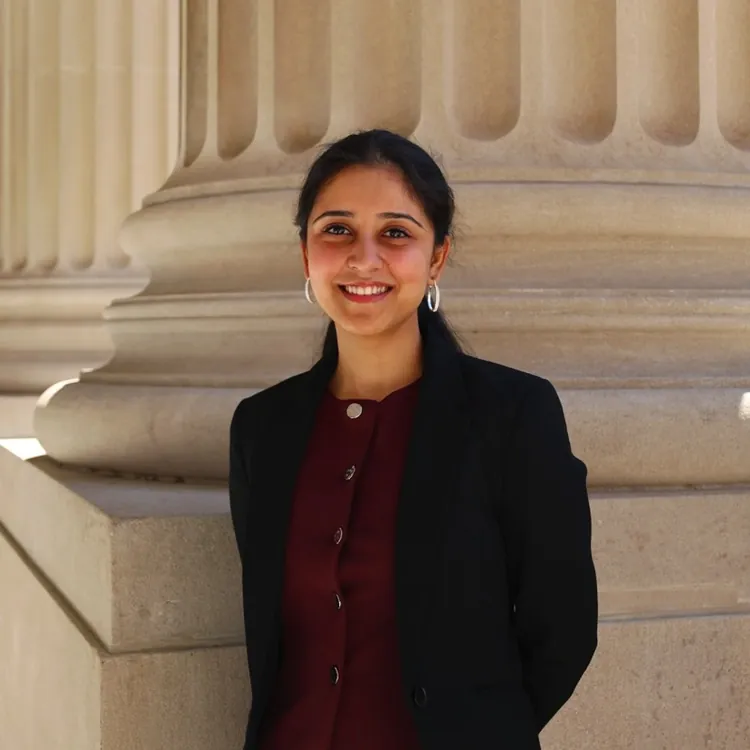
Netra Easwaran
Yale University
B.A. Political Science · Yale Debate Association

Matt Mauriello
Harvard College
2023 North American Debating Champion
One essay, one spring
- Draft 1Thesis too broad. Which half of the question are you actually answering?
- Draft 2Good. Now give the opposing view its best case before you answer it.
- Draft 3Replace the opinion pieces with the two papers we discussed.
- Draft 5Cut the last paragraph. The essay already ends in paragraph nine.
- Draft 6Ready to submit.
02
Unlimited draft edits, for every student on every track.
Most programmes sell "two rounds of feedback". A John Locke essay is not finished in two rounds. Our students send a draft whenever they have one and get it back with line-by-line comments against the seven judging criteria, and this continues until the essay is ready to submit. Six drafts is typical, and we have seen ten.
This applies to Academic Essay Basics and Economics Scholar as much as to Ivy Scholar. What you pay more for on the higher tracks is contact hours, not access to feedback.
03
A unique answer, worked out with the student, never handed to them.
Originality is one of the seven criteria, and it is where most entries fail quietly. Thousands of students answer the same question with the same three positions, and the judges can tell by the second paragraph. We do not supply a thesis. In the thesis workshops the mentor takes the question apart with the student, maps out the answers everyone else will write, and keeps asking what the student actually thinks, and whether they could defend it, until an angle emerges that the student believes and the judges have not read fifty times already.
Then the mentor plays the judge. The strongest objection is put as hard as it can be put, before a single paragraph is polished. If the thesis survives that, it is worth writing.
Programmes for the 2027 cycle
Choose your programme
All four run live online in groups of eight or fewer, except Ivy Scholar, which is one-to-one. Unlimited draft edits come with every one of them. Most families choose John Locke Basics.
Academic Essay Basics
AED 3,200
USD 870 · 24 hours
12 Group Sessions. For students who have not yet written a sourced, argued essay. The foundations before a first attempt at the competition.
- Research, citation and thesis construction
- Argument and counter-argument technique
- One complete essay on a real question
- Unlimited draft edits against the judging criteria
- Mentors from Oxford, Cambridge, Yale and Harvard
John Locke Basics
AED 4,800
USD 1,300 · 30 hours
12 Group + 6 Private. The track most families choose: the full method, then private mentorship through to a submitted essay.
- Everything in Academic Essay Basics
- Thesis workshops on the live 2027 questions
- 6 hours of 1-on-1 mentorship on your essay
- Unlimited draft edits until submission
- Category-specific reading and frameworks
Additional 1-on-1: AED 400/hour
Economics Scholar
AED 3,080
USD 840 · 28 hours
14 Group Sessions. The core of AP Micro and Macro, taught so students can use models as evidence in a John Locke Economics essay.
- Weekly 2-hour sessions from Oct 20, 2026
- Syllabus built from every JL Economics question since 2019
- Capstone essay on a real past question
- Unlimited draft edits on the capstone
- Add John Locke Basics at 20% off
Ages 11-14 (Tue): prior John Locke shortlist required. Ages 14-17 (Thu): open enrollment.
Ivy Scholar
AED 9,600
USD 2,600 · 20 hours
Exclusive 1-on-1. One mentor, one student, one essay, from category choice to the final proofread. For students aiming at a prize.
- 20 hours of private mentorship
- Category and question chosen together
- Individual reading list
- Unlimited draft edits
- Flexible scheduling with your mentor
Which programme?
John Locke Essay Competition Prep, Compared
Four ways to prepare for the 2027 John Locke Essay Competition, side by side. The mentors above teach all of them live online, draft edits are unlimited on each, and the fee listed is the fee you pay.
| Programme | Format | Hours | Fee | Per hour | Best for |
|---|---|---|---|---|---|
| Academic Essay Basics | 12 group sessions | 24 | AED 3,200 / USD 870 | ~USD 36 | A first serious academic essay; students new to research and citation |
| John Locke BasicsMost chosen | 12 group sessions + 6 h of 1-on-1 | 30 | AED 4,800 / USD 1,300 | ~USD 43 | Most entrants: a submission-ready essay with private draft reviews. 38 of 41 students shortlisted in 2026 |
| Economics Scholar Foundations | 14 group sessions, Oct to Jan | 28 | AED 3,080 / USD 840 | USD 30 | Economics or Public Policy category with no prior economics; bundles with Basics at 20% off |
| Ivy Scholar | Exclusive 1-on-1 tutoring | 20 | AED 9,600 / USD 2,600 | USD 130 | Students aiming for a prize rather than the shortlist; one mentor from category choice to submission |
Looking for a John Locke essay competition tutor?
Ivy Scholar is 20 hours of one-to-one tutoring with a single mentor from category choice to submission. Students on John Locke Basics can add private hours at AED 400 per hour. Every tutor on the John Locke tracks has coached shortlisted or commended entrants; see the writing tutors. Not sure which track fits? Book a free 15-minute consultation.
How we compare
Most John Locke prep providers do not publish fees. Where they do, group programmes run around USD 1,000 for 12 hours and one-to-one tutoring USD 90 to 150 per hour. John Locke Basics is USD 43 per hour including six private hours, with the 2026 shortlist rate published on this page and in our results post.
The questions
2026 Essay Questions by Category
One of the three official 2026 questions in each category. Open a category for all three, the trap in each, reading lists and what the judges reward. The 2027 questions are expected in late January and appear on the same pages within 48 hours.
01
Philosophy
"Is it ever wrong to do the right thing for the wrong reasons?"
All three questions02
Politics
"Did the pandemic normalise authoritarianism?"
All three questions03
Economics
"Should we fear a cashless society?"
All three questions04
History
"What might the world look like if the Library of Alexandria hadn't burned down?"
All three questions05
Psychology
"Is mental illness over-diagnosed now, or just better recognised?"
All three questions06
Theology
"Is religious experience better explained by neuroscience or by theology?"
All three questions07
Law
"Is trial by jury obsolete?"
All three questions08
International Relations
"Does foreign aid help or hurt poor people?"
All three questions09
Public Policy
"Should vaccination be mandatory in a public health emergency?"
All three questions10
Science & Technology
"Should we be polite to ChatGPT?"
All three questions
Each of the ten categories offers three questions. Students select one and write up to 2,000 words; entrants under 15 answer the same questions and are judged separately for the Junior Prize.
2027 competition timeline
Three ways in, one deadline.
Dates are projected from the official 2026 calendar. The Institute confirms them when it publishes the questions in late January. Our cohorts are marked in gold.
Our recommendation
Start with the January cohort. It begins before the questions are released, so the research method and category reading are already in place and the whole runway to the end of May goes on the essay itself. February begins as the questions land. March is the intensive track for confident writers.
Our January Cohort Begins
Mid-January 2027
Questions Releasedexpected
Late January 2027
Our February Cohort Begins
February 2027
Our March Cohort Begins
March 2027
Registration Closesexpected
March 31, 2027
Submissions Openexpected
April 1, 2027
Submission Deadlineexpected
May 31, 2027
Shortlist Announcedexpected
Early July 2027
Awards Conference, Londonexpected
October 2027
The competition in brief
- Who can enter
- Any student under 19 on the submission deadline, from any country. Entrants under 15 are judged separately for the Junior Prize.
- The task
- One essay answering one of thirty set questions, three in each of ten subjects.
- Length
- Up to 2,000 words, excluding notes and bibliography.
- Cost
- Free to enter. Late registration and late submission carry fees.
- 2026 calendar
- Questions in late January, registration closed 31 March, submissions 1 April to 31 May, shortlist emailed 7 July, awards in London 2 to 4 October.
- Shortlist rate
- 17.5% of all contestants in 2026, by the Institute's count. Of our 2026 entrants, 38 of 41 (93%).
Dates are the Institute's 2026 calendar; it publishes the 2027 questions and dates in late January. The rules, judging criteria and a plan worked back from the deadline are in our complete guide, and every date, confirmed or expected, is on the deadline page. Check dates on the official site before relying on any of them, including ours.
Common questions
What parents ask before enrolling
Planning your own essay? Print the free John Locke essay planner: question deconstruction, a layered argument map, and a self-audit against the judging criteria.
When is the John Locke Essay Competition deadline?
In 2026 the regular submission deadline was 31 May, with paid late-submission options to 7 June and 21 June, and registration closed on 31 March. The Institute publishes the 2027 questions and dates in late January 2027 and has not announced them yet, so treat late May 2027 as the working deadline and check the official site before planning around it.
Who can enter the John Locke Essay Competition?
Any student from any country who is under 19 on the regular submission deadline. There is no minimum age and no school nomination; students register themselves on the Institute's site. Entrants under 15 on the deadline answer the same questions and are judged separately for the Junior Prize. Entry is free; late registration and late submission carry fees.
What categories can my child write in?
The John Locke Institute Global Essay Prize offers ten subject categories: Philosophy, Politics, Economics, History, Psychology, Theology, Law, International Relations, Public Policy, and Science & Technology (the last three were added in 2026). Each category publishes three questions; students choose one and answer it in up to 2,000 words. There is no longer a separate set of Junior questions: entrants who are under 15 on the submission deadline answer the same questions and are judged separately against their age peers for the Junior Prize. Our program is category-agnostic. The research method, thesis construction and counter-argument technique are the same in every category, and the category-specific week (frameworks, key thinkers, past questions) is taught in small groups sorted by the category each student has chosen.
What makes your results so strong?
In 2026, 38 of the 41 Atlantic Ivy students who entered were shortlisted, a 93% rate in a year when the Institute shortlisted 17.5% of contestants worldwide. The reason is method, not luck. The Institute judges essays on knowledge, evidence, quality of argumentation, originality, structure, style and persuasive force, so we teach rigorous thinking first and prose second: students learn to build a thesis that could genuinely change a reader's mind, to steel-man the strongest objection before answering it, and to cite academic sources rather than opinion pieces. Every student writes as many full drafts as the essay needs, each reviewed line by line by a mentor who studied at Oxford, Cambridge, Yale or Harvard, and the final 1-on-1 hours are spent on the submission itself rather than on generic writing exercises.
Which track should I choose?
Academic Essay Basics (AED 3,200, 12 group sessions) is for students who have not yet written a sourced, argumentative essay and want the foundations before they attempt the competition. John Locke Basics (AED 4,800, 12 group sessions plus 6 hours of private mentorship) is the flagship track and the one most families choose: it covers the same foundations and then carries the student through prompt selection, drafting and submission of a competition essay. Ivy Scholar (AED 9,600, 20 hours of exclusive 1-on-1 mentorship) suits students with strong writing already who are aiming for a Very High Commendation or a category prize. Economics Scholar (AED 3,080) is a subject foundation for students who intend to enter the Economics category. If you are unsure, book a free consultation and we will recommend a track after reviewing a writing sample.
When should I enroll?
For the 2027 cycle we run three intakes: a January 2027 cohort that starts before the questions are released and uses those first weeks on research method, argument structure and category reading, so students can choose a question and begin drafting the day the list is published; a February 2027 cohort that begins as the questions are released and gives the full runway to the expected end-of-May deadline; and a March 2027 cohort that compresses the same curriculum into an intensive track for experienced writers. The Institute has historically announced the questions in late January and closed submissions on 31 May, so the January cohort is our recommendation for most students, with February a close second for families who prefer to start once the questions are known. Enrolling early matters because the strongest essays are the product of research, a first draft, and at least two rounds of revision, each of which takes weeks. Students who submit early drafts for review have consistently had stronger outcomes than those who start writing in May. Places are capped at 8 per group and are allocated in order of enrollment.
How competitive is the John Locke competition?
Very. The Institute reports entries from tens of thousands of students across more than 150 countries each year, and third-party estimates put the 2025 field at over 60,000 essays. In 2026 the Institute announced that 17.5% of contestants had been shortlisted, with commendations, Very High Commendations and the three category prizes going to a much smaller group. Shortlisting is therefore a meaningful academic distinction in its own right, and it is how most of our students' results are counted: 38 of 41 in 2026. Because the field grows every year, the essays that stand out are the ones with a genuinely original thesis, academic sources and a direct answer to the question, which is exactly what the judging criteria reward.
How does John Locke help with university applications?
A John Locke shortlisting or prize is one of the few pre-university credentials that admissions tutors at Oxbridge and the Ivy League recognise on sight, because the competition is judged by senior academics from Oxford, Princeton and other leading universities and rewards exactly the skills a degree demands: independent research, an arguable thesis, and sustained written argument. Many John Locke alumni have gone on to Harvard, Yale, Princeton, Stanford, Oxford and Cambridge. Practically, the essay itself becomes a talking point for personal statements and interviews, the academic referee the competition requires is a natural recommender, and the process of writing to a 2,000-word limit under a real deadline is the closest most school students get to university-level work.
When do the 2027 cohorts start, and which should we choose?
We run three intakes for the 2027 cycle. The January cohort begins in mid-January, before the questions are expected, and spends its opening sessions on research method, argument structure and reading in the student's likely category, so the question-selection and drafting weeks start the moment the list is published. The February cohort begins the week the questions are expected (late January into early February) and gives the full runway to the expected 31 May deadline: roughly six weeks of research and drafting, then revision cycles, then the private mentorship hours on the final submission. The March cohort covers the same curriculum on an intensive schedule and suits students who already write confidently and want a shorter, denser track. All three finish with 1-on-1 mentorship through submission. Ages 14 and over meet on Thursday 6-8 PM or Friday 4-6 PM (Dubai time); ages 13 and under on Tuesday 6-8 PM or Sunday 2-4 PM. All class times are live online and are shown in your own time zone on the enrollment form.
What is Economics Scholar, and who can join?
Economics Scholar is a 14-week foundation course (28 hours, USD 30 per hour) covering the core of AP Microeconomics and Macroeconomics, taught specifically so that students can use economic models as evidence in a John Locke Economics essay. The syllabus was rebuilt against every John Locke Economics question set since 2019: inequality and taxation, labour markets and monopsony, money and cashless payments, public choice, trade and migration. It starts the week of October 19, 2026 (Tuesday October 20 / Thursday October 22) and runs 14 weeks to the week of January 18, 2027, finishing as the 2027 questions are expected. The Thursday 6-8 PM section (ages 14-17) is open enrollment. The Tuesday 6-8 PM section (ages 11-14) is reserved for students already shortlisted in a previous John Locke cycle, so younger students arrive with proven writing fundamentals.
How does the Economics Scholar + John Locke Basics bundle work?
Enroll in Economics Scholar and add John Locke Basics at 20% off: USD 1,040 instead of USD 1,300, so the two-course package is USD 1,880 for 58 teaching hours. You choose each program's schedule independently, and because Economics Scholar finishes the week of January 18 before the February or March John Locke cohorts begin, you can keep the same weekly time slot for both; the January cohort overlaps the final Economics Scholar week, so pick a different weekly time for that one. The discount is applied automatically at checkout when both courses are in your cart; there is no code to enter. The sequence is deliberate: students spend the autumn learning the economics, then arrive at the Basics track in February or March already able to argue with models and data, and use the mentorship hours on the essay itself.
Free resources
John Locke Guides and Tools
Everything we have published on the competition. No email form, no paywall.
01
The Complete Guide
What the competition is, who can enter, the ten categories, every rule and date, how essays are judged, what each result is worth, and how to write one. Start here if the competition is new to you.
02
Deadline and Timeline 2027
Every date on one page: what the Institute has confirmed, what to expect from the 2026 calendar, and when to start.
03
The Interview After Shortlisting
Some shortlisted entrants are invited to an online interview. What the Institute says it is for, what students report, and how to be ready.
04
Past Winning Essays, Analysed
The seven prize essays the Institute has published, taken apart paragraph by paragraph: what they do that shortlisted essays don't.
05
Is It Prestigious, and Worth Entering?
What a shortlist, a commendation or a prize is worth in university applications, and who should not enter.
06
2027 Dates and Changes Tracker
Confirmed vs expected 2027 timeline, every 2026 rule change, and how to prepare before the questions are released.
07
Our 2026 Results, in Detail
How 38 of 41 students were shortlisted: the question-selection, drafting and revision method behind the 93% rate.
08
Free Essay Planner
A printable planner: question deconstruction, layered argument map, and a self-audit against the official judging criteria.
Week by week
Detailed Curriculum
2027 cycle
Three start dates for the 2027 cycle.
January, February or March 2027, live online, with at most eight students per group and unlimited draft edits on every track. Places go in order of enrollment.
Starting earlier? Many of our John Locke students first take the autumn Harvard International Review Academic Writing Contest prep course (deadline January 2, 2027), then move straight into John Locke preparation. Families in the UAE can read how the calendar fits local school terms on our John Locke Essay Competition in Dubai page.