Writing Scholars · Grades 9–12 (Ages 13–18) · Online
International Public Policy Forum Team Prep
The IPPF is the world's leading written debate: a 3,000-word policy essay, a 64-team bracket, and oral finals at NYU School of Law for a $10,000 grand prize. Join an Atlantic Ivy team and write the qualifying essay in eight coached sessions.
What is the IPPF?
The International Public Policy Forum is unlike any other debate competition: there are no tournament weekends and no speeches until the very end. Every autumn a single public-policy resolution is announced, and teams of three to six students submit one 3,000-word essay affirming or negating it. Judges select a Top 64, who then meet in a written single-elimination bracket - each round an exchange of constructives and rebuttals against a real opposing school, with sides assigned by blind draw. The last eight teams fly to New York, all expenses paid, for oral finals at NYU School of Law, judged by a panel of leaders in law, education and public policy. The champion takes home $10,000 and the Brewer Cup.
Founded by the Brewer Foundation in 2001 and run jointly with New York University, the IPPF is now in its 26th season, celebrating 25 years of competition with hundreds of teams from around the world. Recent resolutions have covered universal basic income, NATO, artificial intelligence and pharmaceutical patents; champions have ranged from big American debate schools to Singapore’s Ministry of Education and the national teams of Slovakia and the Czech Republic. For a strong research writer it is the rare debate title won on the page - and for university applications, a rare credential that shows sustained, team-based policy research judged blind by professionals.
Who can enter
- –Full-time high school students, US grades 9–12 or the international equivalent (UK Years 10–13) - typically ages 13–18
- –Teams of 3–6, from one school or an after-school program like ours
- –Homeschooled students welcome
- –No debate experience required - eligibility is by grade, not resume, and we confirm each student is in grade 9 or above at enrollment
The season in numbers
- –1 qualifying essay of 3,000 words, due October 13
- –64 teams enter the written bracket in November
- –4 papers per bracket round, exchanged by email
- –8 teams travel to New York for the April finals
- –$10,000 grand prize and the Brewer Cup
The 2026-27 resolution
“Resolved: The United Nations should prioritize protecting the rights of women and girls over respecting state sovereignty.”
A genuine clash between two founding commitments of the UN Charter - human rights and sovereign equality - with serious scholarship on both sides.
What judges score
- –Clarity of argument
- –Evidentiary support
- –Depth of analysis
- –Refutation
- –Quality of writing
- –Punctuation and grammar
How it works
- 1
Enroll your child
Registration closes September 12. No debate experience is needed - the qualifying round is a research essay, not a speech.
- 2
We form the team
Your class is your team: three to six students, registered with the IPPF by Atlantic Ivy as its after-school program, with our instructor as the named coach. We pay the team entry fee.
- 3
Eight sessions to a finished essay
Twice a week for two hours from September 14, at times set with the enrolled families. Students research, argue and write; we coach method, strategy and revision.
- 4
Submit by October 13
The team submits its 3,000-word qualifying essay before the deadline, formatted and cited to competition standard.
- 5
Advance and keep going
If the team reaches the Top 64, each bracket round is a four-paper written debate. Our round-by-round coaching for advancing teams is offered separately.
Eight sessions, one submission-ready essay
Two hours per session, twice a week. Every session moves the team measurably closer to a finished essay - there is no filler, because there is no time for any.
01The IPPF Format and the 2026-27 Resolution
How the competition works, what past winners did, and a working tour of the resolution: the UN system, "should prioritize", and where sovereignty actually bends.
02Research Methods and Building a Source File
From the official Topic Primer bibliography into the literature it points at: UN treaty texts, IMF and World Bank data, and the scholarship on both sides. Each student takes a research lane.
03Case Construction: Thesis and Contentions
Choosing the affirmative or negative as a team, then building a framework and two or three contentions that can survive four rounds of written scrutiny.
04Outline Review and Evidence Audit
A full-team review of the outline against the evidence file. Does every claim have support? Does every source actually say what we claim it says?
05Draft Workshop I
The first half of the essay in draft, workshopped line by line as a team.
06Draft Workshop II: the Full 3,000 Words
A complete draft, cut and rebalanced to the word limit. The IPPF deletes everything after word 3,000, so economy is a scored skill.
07Judge-Criteria Scoring and MLA Compliance
The draft scored against the six official judging criteria, plus a full MLA, citation and honor-pledge compliance pass. A citation error can cost far more than a weak argument.
08Final Polish and Submission
Final revisions, the cover page, and a submission dry run so the essay arrives complete and on time for October 13.
The 2026-27 IPPF schedule
The course covers the qualifying round. Everything after that is a written head-to-head debate - four papers per round, exchanged with a real opposing school - and we coach advancing teams round by round, priced per round, so you only continue while the team is still in the draw.
- Sep 14
Our course begins
Eight two-hour sessions, twice a week, finishing before the deadline.
- Oct 13
Qualifying essays due
Registration and the 3,000-word qualifying essay are both due to the IPPF.
- Nov 6
Top 64 announced
The Essay Review Committee selects the 64 teams that enter the bracket. Round of 64 begins November 13.
- Dec 29
Top 32 announced
Round of 32 begins January 6.
- Feb 9
Sweet 16 announced
Sweet 16 round begins February 20.
- Mar 2
Elite 8 announced
The final eight teams earn all-expenses-paid trips to New York.
- Apr 16
IPPF Finals in New York
Oral debates at NYU School of Law, April 16-17, for the $10,000 grand prize and the Brewer Cup.
Upcoming dates
IPPF- Nov 6, 2026ESTTop 64 announced
- Dec 29, 2026ESTTop 32 announced
- Apr 16 – 17, 2027EDTFinals, New York
What the course includes
- ✓16 hours of live team coaching across 8 sessions
- ✓IPPF team registration and entry fee handled by Atlantic Ivy
- ✓Full research and drafting curriculum on the 2026-27 resolution
- ✓Essay scored against the six official judging criteria
- ✓MLA, citation and honor-pledge compliance pass
- ✓Submission support through the October 13 deadline
The Record
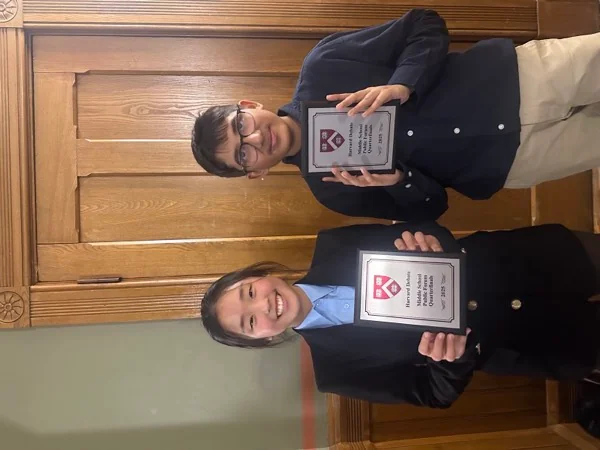
Results Our Writing Students Earned
See the full year-by-year record on our results page
Your Team
No school team? That is the point.
IPPF teams can be formed from an after-school program, and written rounds are judged anonymously - so a coached team of motivated students from different schools competes on exactly equal footing with the biggest debate programs in the world. A Maryland tutoring center won the entire competition in 2022-23.
Atlantic Ivy registers your class as its team, provides the named coach, and handles every deadline. Students bring the arguments.
Meet our writing tutorsTeam facts, from the official rules
- Team size
- 3 to 6 full-time high school students, grades 9–12 or the international equivalent.
- Qualifying essay
- Maximum 3,000 words, MLA format, affirming or negating the resolution. Text past the limit is deleted.
- Bracket rounds
- Four papers per debate: constructives of up to 3,000 words, rebuttals of 1,900 (affirmative) and 1,600 (negative).
- Integrity
- Honor pledge on every paper. Plagiarism means disqualification; AI content must be explicitly cited.
Frequently asked questions
What is the International Public Policy Forum?
The IPPF is a global debate competition for high school students run by the Brewer Foundation and New York University since 2001. It is almost entirely written: teams submit a 3,000-word qualifying essay, the top 64 advance through a single-elimination written bracket, and the final eight travel to New York - all expenses paid - to debate orally at NYU School of Law. The champion receives $10,000 and the Brewer Cup.
Do we need a school debate team to enter?
No. IPPF teams are formed from a high school or an after-school program, and Atlantic Ivy registers each class as its team. This is a proven route: Potomac Oak, a tutoring center in Maryland, won the entire competition in 2022-23, and after-school academies have reached the final repeatedly. Written rounds are judged anonymously, so judges never see what kind of institution a team comes from.
What is the IPPF topic for 2026-27?
The 2026-27 IPPF resolution is: "Resolved: The United Nations should prioritize protecting the rights of women and girls over respecting state sovereignty." Teams choose to affirm or negate it in the qualifying essay; in bracket rounds, sides are assigned by blind draw, so advancing teams must be able to argue both.
What are the age and grade requirements?
The IPPF is open to full-time high school students in US grades 9–12 or the international equivalent (UK Years 10–13), which typically means ages 13–18. Eligibility is decided by grade, not birthday - a grade 9 student of any age qualifies, while a middle schooler does not. We confirm each student is in grade 9 or above when you enroll.
What does the team actually produce?
One qualifying essay of at most 3,000 words, in MLA format, either affirming or negating the 2026-27 resolution on the United Nations, women’s and girls’ rights, and state sovereignty. Judges score clarity of argument, evidentiary support, depth of analysis, refutation, quality of writing, and grammar. Teams that advance then write constructives and rebuttals against a real opponent in each bracket round.
When does the class meet?
Twice a week for two hours, from September 14 through the first week of October. We set the exact times with the enrolled families once the team is formed, so the schedule works across time zones - our students join from the Gulf, Asia, Europe and North America.
My child has never debated. Is this course suitable?
Yes. The qualifying round rewards exactly the skills we teach across our writing programs: research, argument construction, citation and revision. No speaking is required unless the team reaches the final eight in New York - and if that happens, we will be preparing them for it.
Who writes the essay?
The students - every word. IPPF rules require the paper to be the original work of the team members, with coaches limited to advising, and every team signs an honor pledge. We coach research method, argument strategy and revision to that standard, which is also what makes the course worth taking.
Is AI allowed in the competition?
The IPPF discourages AI use and requires any AI-generated content to be explicitly cited in MLA form; uncited use is plagiarism, and plagiarism means disqualification. We teach students to research and cite properly so their work stands entirely on its own.
What does the IPPF itself cost to enter?
The IPPF charges $25 per team, waived for early registration. Atlantic Ivy handles the registration and pays any entry fee for its teams - the course tuition is all you pay.
What happens if the team makes the Top 64?
The team enters the written bracket announced November 6, where each round is an exchange of four papers: two constructives and two rebuttals, on a side assigned by blind draw. We offer round-by-round coaching for advancing teams as a separate engagement, priced per round, so you only continue while the team is still in the draw.
How is this different from your John Locke course?
John Locke is an individual philosophical essay; the IPPF is a team policy essay that turns into a live written debate against real opponents. The research and writing muscles are the same, which is why we built this course - and why many students do both: the IPPF season ends just as John Locke preparation begins in January.