History research mentorship · Year-long · Online
The Concord Review Program
A history paper of eight thousand words or so, sole-authored, with Turabian endnotes, written to the standard of the only journal in the world that publishes secondary-school historical research. It takes a year, and we supervise every month of it.
A weekly Sunday seminar with at most eight students, unlimited supervision between sessions, and draft edits that continue until the paper is ready. Every mentor studied at an Ivy League, Oxbridge or G5 university.
USD 4,000 for the year, everything included. The price is on this page.
The Concord Review · the journal's own figures
of submissions are published
8,000+
words in the average published paper
Four
quarterly deadlines a year: Feb 1, May 1, Aug 1, Nov 1
Publishing the history research of secondary students since 1987. Papers run 5,000 to 10,000 or more words including endnotes, on any historical topic, concerning any country. Submission requirements at tcr.org
The journal
What is The Concord Review, and why does a serious attempt take a year?
The Concord Review is the only journal in the world that publishes the academic history research of secondary students. It has appeared quarterly since 1987, and its standards are those of a university press: papers of 5,000 to 10,000 or more words, including endnotes, on any historical topic, ancient or modern, concerning any country. The paper must be the student's own work, written alone, in English.
The journal states that it accepts roughly 5% of submissions, and the average published paper exceeds 8,000 words. That combination of selectivity and length is why a serious attempt takes a year, and why we built this program around sustained supervision rather than a short course. Compressing the work into a term produces the thin, hurried paper the journal declines.
Submissions are considered on a rolling basis against four quarterly deadlines, so a student who starts in September can target the deadline that suits the state of their paper rather than racing a single date. Each submission carries a $70 fee, which includes a subscription to the journal.
- 1987
- publishing since
- ~5%
- of submissions accepted
- 8,000+
- words, average published paper
- Four
- deadlines a year
Quarterly deadlines
- February 1
- May 1
- August 1
- November 1
Rolling consideration: a paper submitted after one deadline is read for the next issue.
What a result means
The ladder, from submission to prize
The journal's own coaching services state that they cannot guarantee publication. Neither do we, and you should be wary of anyone who does. At a 5% acceptance rate, honesty about the odds is part of taking the work seriously.
- 01
Submission
A sole-authored history paper of 5,000 to 10,000 words with Turabian endnotes, sent to any of the four quarterly deadlines with a $70 fee.
- 02
Editorial review
The journal reads every paper against the standard of its published issues and accepts roughly 5%, by its own count.
- 03
Publication
Accepted papers appear in the quarterly journal, with the author’s name and school, and stay in its archive.
- 04
Emerson Prize
The Ralph Waldo Emerson Prize goes each year to the strongest published papers.
What we guarantee
We sell the paper and the skill. Publication is the upside.
Every student finishes the year with a sole-authored history paper of around 8,000 words that could be sent to the journal, and with the research skills it took to write it. Whether the editors accept it is their decision, not ours.
We prepare every submission as if it will be read against that 5% bar, because it will be.
Guaranteed
- A finished, publication-quality history paper of around 8,000 words
- A year of weekly seminars and unlimited personal supervision
- University-level research skills: historiography, primary sources, Turabian endnotes
- A substantial sole-authored work the student can point to, published or not
The upside
- Publication in The Concord Review itself
- The Ralph Waldo Emerson Prize, awarded each year to the strongest published papers
- A distinction the journal notes many admissions officers recognise
- A submission the student may note on university applications, in the journal’s own wording
How we work
Three things we do that most research mentoring does not.
The published papers are public, so our method is to hold every draft against them. The people reading the drafts should have written at this level themselves. The supervision should not stop when the seminar does. And the thesis has to belong to the student, because the journal reads for exactly that.
01
Every mentor studied at an Ivy League, Oxbridge or G5 university.
We are not a tutor marketplace, and "a top university" is not good enough. The program is supervised by the mentor team behind our John Locke and HIR results, who went through Harvard, Yale, Oxford and Cambridge, joined this year by history specialists from the LSE. Each student works with a supervisor who has done long-form archival research, from historiography to Turabian endnotes.
The seminar is capped at eight, so the same supervisor reads every chapter closely every week.
Meet the writing mentors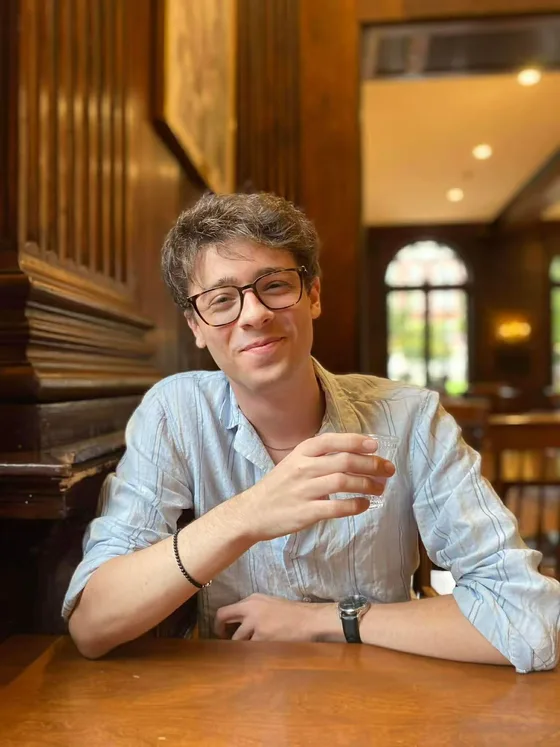
Matt Mauriello
Harvard College
2023 North American Debating Champion
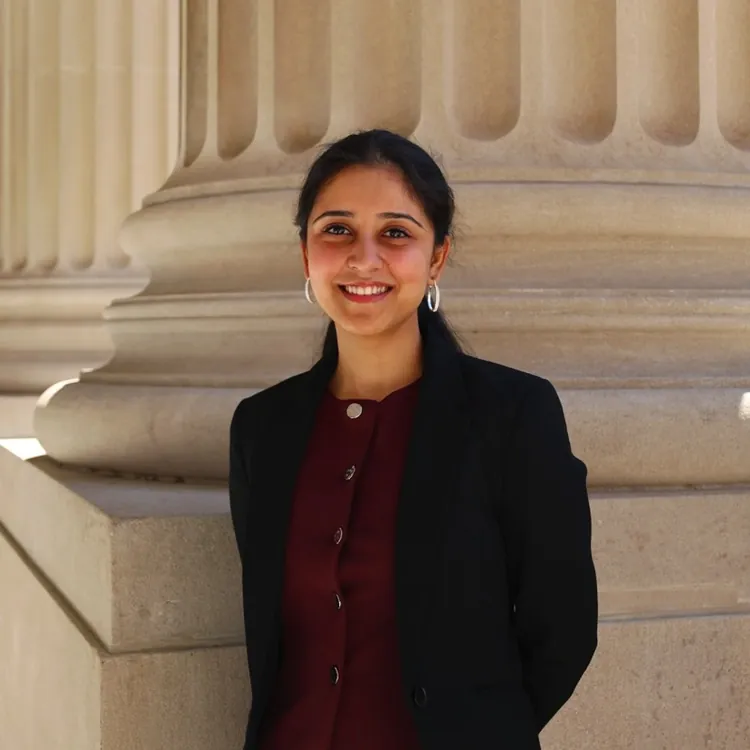
Netra Easwaran
Yale University
B.A. Political Science · Yale International Relations Association
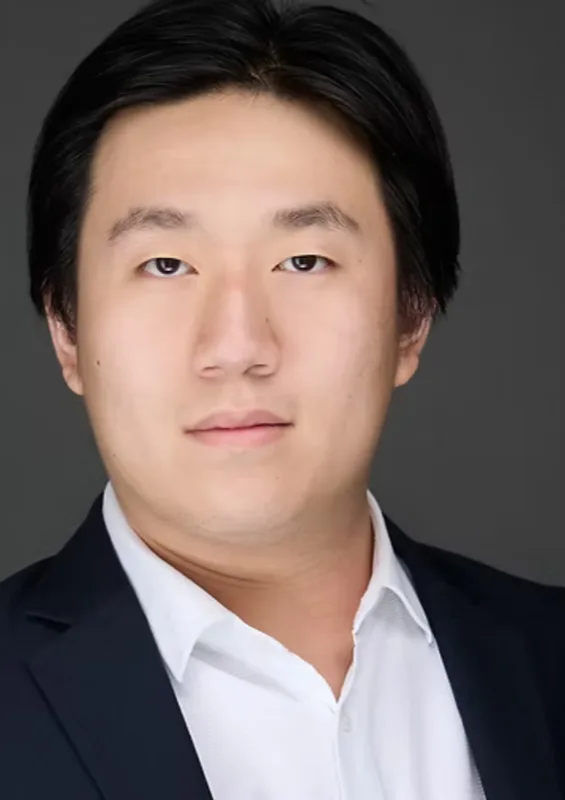
Ricky Huang
University of Oxford
Director of Training, Oxford Union · Founder

Peregrine Beckett
University of Cambridge
MSt candidate · Head Coach, Columbia Debate Society
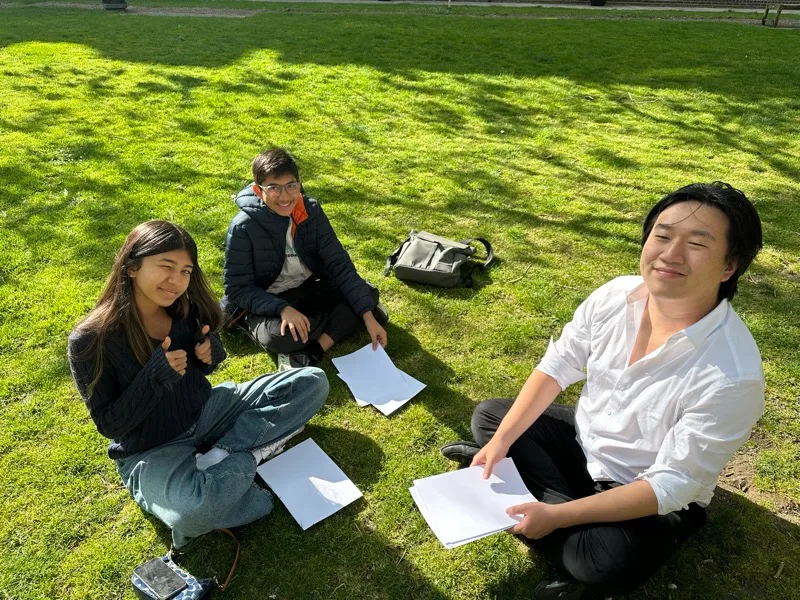
One paper, one year
- Month 1The topic is a whole war. Which decision inside it has nobody explained?
- Month 4Two more primary sources before you argue this. The archive is linked.
- Month 6Good. Now say where this disagrees with the standard account, and why.
- Month 10Section three belongs before section two. Move it and the argument lands.
- Month 12Ready to submit.
02
Unlimited supervision, and unlimited draft edits, all year.
The seminar meets for two hours on Sundays. The paper does not confine its problems to that window, so neither do we. Students send drafts, sources and research questions to their supervisor whenever the work raises them and get individual written feedback back, with one-on-one calls arranged as the work requires. There is no per-hour cap.
This is the structure of a university dissertation supervision, applied a few years early. It is included in the single yearly fee. There is nothing to add on.
03
An original thesis, worked out with the student, never handed to them.
The journal publishes research, not reports. A paper that retells the standard account of a topic in 8,000 careful words is declined, however clean the endnotes. We do not supply a thesis. The first two months are spent on the student's own question and on historiography: reading what historians have already argued, and finding where this paper can enter that conversation. The supervisor keeps asking what the sources actually show, and whether the student could defend the reading, until an argument emerges that is theirs and that the literature has not already made.
Then the supervisor plays the editor. The strongest objection is put as hard as it can be put, before the drafting months begin. If the thesis survives that, it is worth 8,000 words.
Why a year
Twelve months, mapped to the quarterly deadlines.
An 8,000-word sole-authored history paper is a marathon, not an essay. We map the whole year so that every stage gets the time it actually needs, and the student submits to whichever deadline the paper is ready for.
Weekly commitment
Five to seven hours: the two-hour Sunday seminar plus three to five hours of independent reading, research and writing. The research months (three and four) and the drafting months (eight and nine) run heavier. We say this up front because the program only works if the hours exist.
Topic & Research Question
Month 1
Choosing a historical topic that can sustain a year of work, and narrowing it to a question worth 8,000 words of answer.
Historiography
Month 2
Reading what historians have already argued about the topic, and finding where the paper enters that conversation.
Primary & Secondary Research
Months 3–4
Systematic work with primary sources and scholarly literature, building a research file deep enough to support a long paper.
Turabian Endnotes & Annotated Bibliography
Month 5
The citation apparatus The Concord Review expects, built alongside the research rather than bolted on at the end.
Argument Development
Month 6
Turning findings into an original historical thesis that can carry a paper of this length.
Outlining
Month 7
The architecture of a long-form paper: section order, evidence placement, and narrative shape.
Drafting
Months 8–9
Writing the full paper in supervised stages, balancing narrative history with analysis.
Structural Revision
Month 10
Reworking the draft at the level of argument and organisation, not just sentences.
Style & Scholarly Voice
Month 11
Editing toward the measured, scholarly register of published Concord Review papers.
Final Editing & Submission
Month 12
Formatting, final checks, and submission to the next quarterly deadline.
Enrollment
One program, one price
A single year-long enrollment covers everything: the full Sunday seminar series from the week of September 7, and unlimited personal supervision through to submission.
Who it is for
- Best started in
- Years 10–11, so the finished paper exists before university applications. Younger students with strong writing are welcome after a conversation.
- Prerequisites
- None formal. Comfort reading serious non-fiction matters more than any prior research experience.
- Weekly commitment
- 5–7 hours: the 2-hour Sunday seminar plus 3–5 hours of independent reading and writing, heavier during research and drafting months.
No research experience is expected; teaching the craft of research is the point. Unsure whether your child is ready for work at this length? Message us. We will tell you honestly, including when the answer is "wait a year".
The weekly seminar
Sundays4:00 – 6:00 PM GST
The whole cohort meets once a week, year-round. Times show in your zone by default.
The Concord Review Research Program
USD 4,000
per year · 72 live hours + unlimited supervision
Sundays 4:00–6:00 PM GST. Live online from the week of September 7, twelve months to a finished, publication-quality paper.
- 72 hours of live Sunday seminars across the year
- Unlimited personal supervision between sessions
- Unlimited draft edits, from outline to final paper
- Class capped at 8 students
- Turabian endnotes and annotated bibliography training
- Submission strategy for the quarterly deadlines
Common questions
What parents ask before enrolling
Starting the research yourself? Print the free research prospectus template: question, sources, historiography and a timeline on one page.
What is The Concord Review?
The Concord Review, founded in 1987, is the only journal in the world that publishes the academic history research of secondary students. It appears quarterly and accepts roughly 5% of submissions, a figure the journal states officially. Published papers average more than 8,000 words and use Turabian endnotes.
Is The Concord Review worth it for college admissions?
The journal itself is careful on this point. It notes that many admissions officers are familiar with its work, and that students may note a submission on their applications. Beyond that, a completed sole-authored research paper of around 8,000 words is rare, verifiable evidence of academic ability, whether or not it is ultimately published.
How long is the paper?
Submissions run 5,000 to 10,000 or more words, including endnotes. The average published paper exceeds 8,000 words, which is why we structure the program across a full year rather than a term.
Can you guarantee publication?
No, and you should be wary of anyone who does. The Concord Review’s own coaching services state that they cannot guarantee publication, and neither do we. What we guarantee is the supervision and a finished, publication-quality paper. Acceptance is the upside.
What topics qualify?
Any historical topic, ancient or modern, concerning any country. The paper must be the student’s sole-authored work in English. Our first month is devoted to finding a topic the student can care about for a year and a research question that can carry the length.
How much time does it take each week?
Plan for five to seven hours: the two-hour Sunday seminar plus three to five hours of independent reading, research, and writing. The load is not uniform — the primary-research months (roughly months 3–4) and the drafting months (8–9) run heavier, while topic-selection and revision phases run lighter. We tell families this up front because the program only works if the weekly hours actually exist.
What year groups is the program for?
Most students start in Years 10 or 11 (US grades 9–10), which means the finished paper — and any publication decision — lands before university applications are written. Years 12–13 students can absolutely do the work, but the admissions timing is tighter. Younger students with unusually strong writing are considered after a conversation with the family.
What does unlimited personal supervision mean?
In addition to the weekly Sunday seminar, students may send drafts, sources, and research questions to their supervisor at any point between sessions and receive individual written feedback, with one-on-one calls arranged as the work requires. There is no per-hour cap. A year-long research project does not confine its problems to a two-hour weekly window, so neither do we.
Free resources
Concord Review guides and tools
Everything we have published on the journal. No email form, no paywall.
01
How to Get Published, Realistically
What the journal accepts, the 12-month plan, and why most submissions fall short of the ~5%.
02
Research Prospectus Template
The one-page plan we ask every student to write in month one: question, sources, historiography, timeline.
03
Turabian Cheat Sheet
Endnotes and bibliography entries for every source type a history paper is likely to use.
04
Primary Source Archives
A directory of free digital archives, by period and region, for the research months.
The year begins the week of September 7
Twelve months later: a finished, publication-quality history paper.
Sundays 4:00–6:00 PM GST, live on Zoom, at most eight students, unlimited supervision between sessions. One enrollment, one price, nothing to add on.
Shorter first? Many families start with the autumn Harvard International Review contest course or John Locke preparation before committing to a year of research.